Recruiting qualified guards for night shifts was becoming increasingly difficult for one large outlet center in Germany, which welcomes thousands of visitors each day across a wide retail environment. The site needed reliable nighttime security coverage, but also a model that could be sustained over time and adapted as operational needs evolved.
Together with Securitas, the client implemented a hybrid security model combining on-site personnel, autonomous robotics, and centralized monitoring. The result is a more connected, proactive approach to nighttime security, where technology extends the reach of people at the center of decision-making.
Creating more consistent night coverage through human expertise and technology
Securitas partnered closely with the client, designing a hybrid security setup around three operational objectives:
- Maintaining reliable night coverage across the site
- Improving operational visibility and response through connected monitoring
- Reducing dependence on increasingly difficult-to-fill night shift
This reflects a broader shift in security: from static coverage to more dynamic models where people, technology, and data work together to improve outcomes.
How the hybrid security model works in practice
During the day, on-site guards remain present across the outlet center, supporting daily operations, assisting visitors, and providing a visible security presence. At night, an autonomous patrol robot takes over perimeter patrols, following predefined routes, continuously monitoring the site, and detecting irregularities based on predefined criteria.
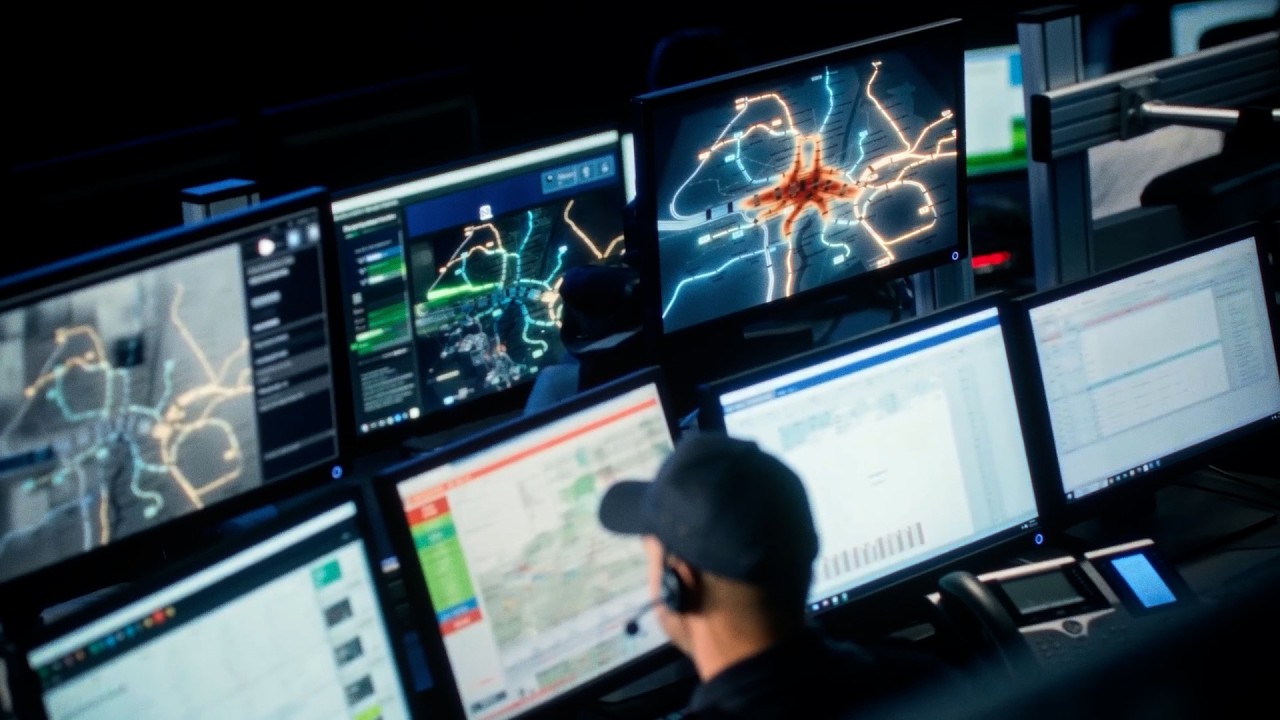
The robot is connected directly to the Securitas Security Operations Center (SOC). When unusual activity is detected, alerts are immediately transmitted to SOC operators, who review the situation in real time using the robot’s video and data feeds. If intervention is required, mobile patrols can be dispatched directly to the site.
This creates a security model where every alert is verified by trained people, supported by real-time data and connected technology, before the appropriate response is taken.
Measurable improvements in coverage, efficiency, and visibility
The benefits of the hybrid security model became visible quickly. By combining autonomous patrols with centralized monitoring and human decision-making, the client was able to improve nighttime perimeter coverage while using security resources more efficiently.
The client observed several measurable improvements, including:
- More consistent perimeter coverage through autonomous patrol
- Faster verification and response through direct SOC integration
- More efficient use of mobile patrols based on verified alerts
- Improved operational visibility through centralized monitoring and structured reporting
- Reduced annual security costs through the hybrid security model
Over time, the robot became an integrated part of the overall security operation. It now works alongside guards, mobile patrols, and SOC operators as part of one connected model, helping the client maintain reliable coverage while ensuring human expertise remains central to every decision.
Applying robotics and centralized monitoring across large and complex sites
This project demonstrates how robotics and centralized monitoring can support reliable security coverage while strengthening visibility, efficiency, and response.
More importantly, it shows how an integrated model – combining human expertise, technology, and real-time data – can help move security from reactive coverage to more proactive, intelligence-led operations.
The same approach can also be adapted to logistics hubs, industrial sites, business parks, and other large environments where maintaining reliable nighttime coverage can be complex. Because the model is scalable, organizations can apply the same principles in different settings, adjusting the balance of people, technology, and monitoring to match their specific security needs.
This is intelligence-led security in action.